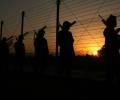
Jammu and Kashmir was peaceful last night with no hostilities between the Indian and Pakistani militaries along the Line of Control and the International Border.
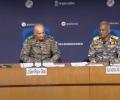
India's robust air defence system effectively thwarted Pakistani attempts to target Indian installations.

Kashmiris across the region condemned the terror attack in Pahalgam that killed 26 people, mostly tourists, with widespread protests and a shutdown in Srinagar and other parts of the valley. The attack was seen as an assault on the foundation of Kashmir's economy, with residents highlighting the importance of tourism to the region's livelihood. Protests were held in various districts, including Srinagar, Kulgam, Handwara, and Ramban, with residents united in their condemnation of the violence and calling for an end to terrorism.

Defence Minister Rajnath Singh has assured the nation that India will respond strongly to the recent terror attack in Kashmir's Pahalgam, which killed 26 people. He stated that India will not be intimidated by such acts and will take every necessary step to trace those responsible and those who conspired behind the scenes. Singh described the attack as "extremely inhuman" and reiterated India's zero-tolerance policy against terrorism.

Implementation of sports bill in 6 months, regulation of participation standard safeguard: Mandaviya
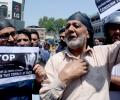
'We in Kashmir will ensure that this kind of incident does not happen again.'

'If you are in a position to give employment to local people, you will find no terror attacks in your area.'
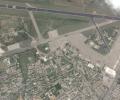
'We do not want to fall into a trap of uncontrolled escalation or all out conflict.' 'When the need arises we will do that.'

The home minister, however, said the government will make an exception in case someone from a family comes forward and informs the authorities that his or her close relative has joined a terror outfit.

Bhutto, who served as the Foreign Minister earlier, addressed a briefing at the UN Headquarters in New York and sought reconciliation with India, making a plea for talks and Intel sharing between the two neighbours.

India stressed that it is even more extraordinary for a country with a history of rigged elections to talk about political choices, that too in a democracy.

The government on Thursday told an all-party meeting that the Pahalgam attack was carried out to vitiate the atmosphere at a time when the economy of Jammu and Kashmir was on the upswing and tourism was booming. Briefing reporters after the meeting chaired by Defence Minister Rajnath Singh, Union minister Kiren Rijiju said all parties said they were with the government and against terror. The party leaders were briefed by Intelligence Bureau (IB) and Union Home Ministry officials on the steps being taken to prevent the recurrence of such incidents, Rijiju said. Home Minister Amit Shah, present in the meeting, interjected wherever required as officials briefed MPs, according to sources. At least 26 people, mostly tourists, were killed and scores injured when terrorists shot them in Pahalgam in Jammu and Kashmir on Tuesday.

The Telangana High Court upheld a trial court's verdict handing out death penalty to five senior operatives of banned terror outfit, Indian Mujahideen, involved in a bomb blast that left 18 people killed in 2013. The court dismissed the criminal revision appeal filed by the IM operatives while upholding the NIA court's judgment. The five members, including IM co-founder Mohd Ahmed Sidibapa alias Yasin Bhatkal, Pakistani national Zia-ur-Rahman alias Waqas, Asadullah Akhtar alias Haddi, Tahaseen Akhtar alias Monu and Ajaz Shaikh, were convicted in 2016. The special court for NIA cases here awarded capital punishment to five convicts treating it as a rarest of the rare case. The high court, after conducting a detailed hearing in the appeals filed by the convicts, confirmed the death sentence of the five IM operatives.

The Galwan clashes indicate to the limitations in relations if they do not address border stability, points out Srikanth Kondapalli.
The Galwan clashes indicate to the limitations in relations if they do not address border stability, points out Srikanth Kondapalli.

'The fight against terrorism will continue. We have set a new normal and the new normal is that we will follow an offensive strategy. Wherever terrorists are, we have to kill those terrorists and we have to destroy their infrastructure. So it is still not over but as we speak the ceasefire is still intact'
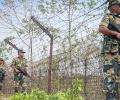
The two policy decisions to bolster BSF capabilities at this front have been taken in the wake of the stepped up security arrangements along the border following the fall of the Sheikh Hasina government in Bangladesh on August 5, 2024.

Pakistan's ambassador to Russia, Muhammad Khalid Jamali, has warned that Pakistan will respond with "full spectrum of force", including nuclear, if it is attacked or its vital water flow is disrupted. The warning comes amid heightened tensions between Pakistan and India following a terrorist attack in Jammu and Kashmir. Jamali also reiterated Pakistan's stance on the Indus Water Treaty, saying any attempt to stop or divert water flow would be considered an act of war. He urged de-escalation, emphasizing the potential danger given both countries possess nuclear weapons. Jamali further called for a neutral investigation into the Kashmir attack, suggesting the involvement of China and Russia. He also highlighted the need to address the root causes of the conflict, pointing to the unresolved Kashmir issue and its potential for resentment.
The United Nations Secretary-General, Antonio Guterres, has called for de-escalation between India and Pakistan, expressing deep concern over rising tensions following a terrorist attack in Jammu and Kashmir. Guterres reiterated his condemnation of the attack and urged both sides to avoid a confrontation, which he described as catastrophic. The Secretary-General has also offered his good offices to support de-escalation efforts. The President of the UN General Assembly, Philemon Yang, has also expressed concern over the escalating violence and called for a resolution through diplomatic means. Meanwhile, Pakistan has denied any involvement in the attack and reiterated its commitment to fighting terrorism.

Sheikh Sajjad Gul, the head of Lashkar-e-Taiba proxy The Resistance Front (TRF), has been identified as the mastermind behind the Pahalgam terror attack that killed 26 people in April. Gul, who is based in Pakistan, has a history of planning terror attacks in Kashmir, including targeted killings, grenade attacks, and ambushes of police personnel. He was designated a terrorist by the NIA in 2022 and a reward of Rs 10 lakh was placed on his head. The TRF claimed responsibility for the Pahalgam attack, where tourists were shot at point-blank range after being asked their religion. Gul's history includes a 2002 arrest in Delhi for planning serial blasts and a subsequent 10-year prison sentence. After his release, he moved to Pakistan and became the leader of the TRF in 2019, a move orchestrated by the ISI to present a facade of an indigenous terror movement in Jammu and Kashmir.
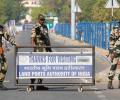
Pakistan Volleyball Federation on Sunday said India have withdrawn their contingent from the next month's Central Asian Volleyball in Islamabad.

The LG said around 2.36 lakh pilgrims had registered for the yatra before the attack took place at Baisaran in Pahalgam area that left 26 persons -- mostly tourists -- dead.

Rahul Gandhi accuses PM Modi of prioritizing his image over national security after the Pahalgam attack, challenging him to refute Trump's claims of brokering a ceasefire between India and Pakistan.
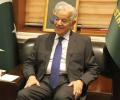
Last week, Information Minister Atta Tarar had said that 24-36 hours were important, fearing a possible strike by India. However, the time passed and there was no action by India.
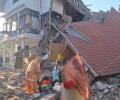
With this, the total number of houses of terrorists and their overground workers demolised since the Pahalgam attack has gone up to nine.
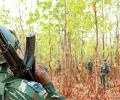
The Central Reserve Police Force (CRPF) has announced the formation of a special CoBRA battalion for counter-terrorist operations in Jammu and Kashmir. This decision comes 17 years after the jungle warfare unit was established to combat Naxal insurgency. The new battalion, directed by Union Home Minister Amit Shah, will be deployed in forested areas of Jammu and Kashmir, including the Jammu region, where recent terrorist incidents have occurred. CoBRA units are known for their specialized jungle warfare and guerilla tactics training, and the new battalion will be equipped with modern weaponry, communication, and surveillance equipment.
Security forces have intensified anti-terror operations after the April 22 Pahalgam terror attack, eliminating six hardcore terrorists in the past three days in Kashmir.

India shouldn't play Pakistan even at ICC events till terrorism ends: Gambhir

The Central Asian Volleyball tournament, which India withdrew from following the terror attack in Pahalgam, has been shifted from Islamabad to Tashkent in Uzbekistan.

Security has been heightened outside the Patiala House Court in Delhi ahead of the expected appearance of Tahawwur Rana, a key accused in the 2008 Mumbai terror attacks. Rana, who was extradited from the US, is likely to be produced in court on Thursday. The Delhi Police and paramilitary forces are carrying out thorough security checks to prevent any untoward incidents.

Five army personnel were killed and six injured on Monday when terrorists ambushed their vehicle in the remote Machedi area of Jammu and Kashmir's Kathua district, officials said.

The incident has brought back into focus the controversy that erupted last year when BJP-led governments in Uttar Pradesh and Uttarakhand directed food outlets along the Kanwar route to display the names of their owners and staff.
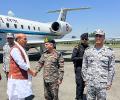
Defence Minister Rajnath Singh on Thursday questioned the safety of nuclear weapons in the hands of Pakistan, and said they should be taken under monitoring of the International Atomic Energy Agency.

Former spinner Danish Kaneria suggested that Pakistan has a role in the Pahalgam terror attack in India which led to 26 deaths.

According to officials, Naik Kuldeep Singh of Punjab was on guard duty when he was hit by a bullet in the head at Sunjawan Military Station on the outskirts of Jammu and was evacuated to a hospital where he succumbed to injuries.

The Indian Army effectively responded to firing by Pakistan military at some places along the Line of Control (LoC) in Jammu and Kashmir on Thursday night, military sources said. There were no reports of any casualties. The firing by Pakistan Army comes amid increasing tensions between the two sides over the Pahalgam terror attack that killed 26 civilians.

A Border Security Force (BSF) jawan was detained by Pakistan Rangers after accidentally crossing the Punjab border. Constable PK Sahu of the 182nd battalion was apprehended by the Rangers across the Ferozepur border. Sahu, a resident of West Bengal, was in uniform and carried his service rifle. A flag meeting is underway between the two forces to secure his release.

The Supreme Court of India dismissed a Public Interest Litigation (PIL) seeking safety measures for tourists in remote hilly areas of Jammu and Kashmir, criticizing the petitioner for seeking publicity without a genuine public cause. The PIL was filed in response to a terror attack in Pahalgam that killed 26 people, mostly tourists. The court stated that the petitioner had a history of filing similar PILs primarily for publicity.

Harpreet Singh alias Happy Passia alias Jora, an alleged terrorist who had illegally entered the US, was arrested by the FBI and US Immigration and Customs Enforcement's Enforcement and Removal Operations in Sacramento.

Will Mamata's bhasha andolan campaign sway Bengal's bhadralok before the 2026 election in the TMC's favour?
